Olinka Village
The Color PurpleOlinka Village is the setting for Nettie’s work as a missionary and for the novel’s sustained account of a community being dispossessed in the name of colonial development. Through her letters to Celie, the village first appears as a place of cultivation, teaching, welcome, and shared custom; it becomes a landscape cut apart by a road and a rubber plantation, where control of land and water is taken from the people who live there. The destruction is not only material: it also threatens the practices, foodways, and sacred beliefs through which the community understands its home.
Setting and Community
Nettie reaches Africa after an unexpected opening in the missionary party: a woman who was meant to travel with Corrine and Samuel marries a man who will not let her go, leaving a ticket available just as Nettie cannot find work. Nettie had not thought of Africa as a real place, despite hearing Samuel, Corrine, and the children speak about it. The journey gives that imagined continent a particular route and history. The party leaves Southampton on July 24, stops in Lisbon and Dakar, and arrives in Monrovia on September 12. On seeing the African coast, Nettie, Corrine, and Samuel kneel on deck in gratitude, connecting their return to the land their ancestors had longed to see with the history of capture and enslavement that had separated them from it.
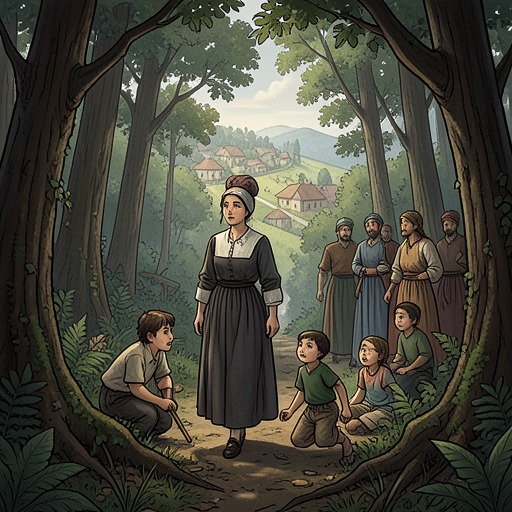
Olinka Village is presented through the daily life Nettie records. Its people cultivate cassava, groundnuts, Yams, cotton, and millet, and the village’s welcome to the newcomers includes a meal of chicken and groundnut stew, songs, and dancing beneath a leaf canopy. The ceremony centers on the sacred Olinka roofleaf material. In the story recited for the visitors, a chief’s greed leads him to claim common land for more crops and wives’ labor, and eventually to cultivate the ground where the roofleaf grew. The story makes the material more than a practical covering: the village’s history and its relationship to the land are bound up with the roof over its homes.
The Mission and Education
Nettie and Samuel establish a mission school that serves as both a place of instruction and part of the village’s daily rhythm. The family rises at five for millet porridge and fruit, then teaches English, reading, writing, history, geography, arithmetic, and Bible stories. After lunch and household work, afternoon lessons begin at four; adults can attend at night. The schedule is shaped by the heat, which makes the middle of the day too hot for activity. Some older children already know the school, but younger ones are sometimes brought unwillingly by their mothers, and at first the pupils are all boys except Olivia.
The restriction on girls’ education is expressed as a social rule: a mother tells Nettie that a girl has no value in herself and becomes something only through her husband. The school therefore tests expectations about women’s place as well as teaching literacy. Over time, the boys accept Olivia and Tashi in class, and more mothers send their daughters. Men object to the prospect of wives who know as much as their husbands, while women continue to bring their children. Education takes root through a gradual change in who is permitted to learn, not through a sudden disappearance of opposition.
The Road and Loss of the Village
The first signs of the road arrive indirectly: movement and humming in the forest give way to chopping, dragging, and smoke. After two months of clearing, a boy announces that the road is approaching. Villagers gather near the cassava fields to watch, sitting or squatting together, chewing cola nuts and making patterns in the dirt. They feed the roadbuilders goat meat, millet mush, baked Yam, cassava, cola nuts, and palm wine. Because the workers speak a different language, communication is limited, yet the daily meals create an appearance of friendship. The villagers assume the road is being built for them, and hear that it will shorten the journey to the coast to three days.
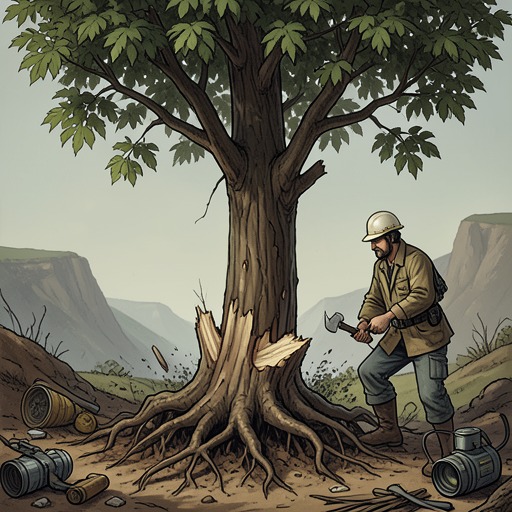
That expectation collapses when the workers continue beyond the village and begin cutting the road through it. Their route takes in Catherine’s newly planted Yam field. The builders carry guns and have orders to shoot; as they proceed, they level every hut in the path, along with the church, school, and Nettie’s hut. The missionaries save their belongings, but the tarmac road leaves the village physically gutted. What had seemed like a connection to the coast is revealed as an imposed line of passage through the community’s own homes and fields.
The chief travels to the coast seeking explanations and reparations and returns two weeks later with news that the whole territory, including the village, belongs to an English rubber manufacturer. He has seen other villagers clearing forest and planting rubber trees. The company’s representative, based in a governor’s mansion, knows the Olinka only from a map; the chief’s limited English makes the meeting still more unequal. The consequences are immediate and enduring: although the Olinka no longer own their village, they must pay rent to remain there, and they must pay a water tax to use water that no longer belongs to them. The destruction of forest and game also drives men farther from home to hunt, while women continue tending their crops and singing to the earth and sky.
Displacement, Roofleaf, and Survival
For several months after the road’s arrival, the people avoid it where they can and refuse to look toward the coast. Nettie and Samuel rebuild a church, school, and hut, and the community waits. But rebuilding cannot restore ownership. When the planters require the villagers to move because they want the village site as the rubber plantation’s headquarters, they choose it in part because it is the only nearby place with a steady supply of fresh water.
The new ground is barren and has no water for six months of the year. During that period the displaced people must buy water from the planters; in the rainy season they try to dig cisterns in nearby rock and collect water in discarded oil drums. The planters also plow under the village and the surrounding roofleaf. The Olinka will not live in a dwelling without their sacred covering, so the builders leave the men’s barracks and the barracks for women and children roofless. After weeks in the sun, a truck brings corrugated tin, which the villagers must buy. The purchase exhausts their meager savings and nearly consumes the money Nettie and Samuel had set aside for the children’s education. As the women raise a prolonged cry of sorrow while the tin roofs go up, the community acknowledges a temporary defeat imposed through the loss of both land and sacred material.
The costs continue through changes in food and health. The planters replace the Olinka Yam crop with canned and powdered goods, although Yams have long helped protect people from malaria and chronic blood disease. With insufficient Yams, sickness spreads and people die at an alarming rate. The loss of cultivated land is thus also a loss of local knowledge and the means of maintaining health. Tashi and her mother Catherine eventually leave to join the mbeles, a group said to shelter runaways and resist the plantations; Adam and Olivia are heartbroken by their departure and by the likelihood that those who join do not return.
Narrative Significance
Olinka Village changes in the letters from a place of homecoming and possibility into a record of dispossession. Its welcome ceremony, school timetable, farming, and roofleaf story establish a community with its own history and systems of value before the road and plantation impose new boundaries. The colonial project then recasts the village’s common land, water, crops, and homes as resources to be controlled for rubber production. Its violence unfolds not only in the dramatic destruction of huts but also in rent, water charges, lost harvests, and the gradual damage to health.
The village also complicates the missionaries’ own sense of purpose. Nettie and Samuel come intending to teach and serve, but their school and home are themselves destroyed by the development that displaces the Olinka. Their later appeal to churches and the Missionary Society in England fails; on their return, the villagers receive the news in disappointment and go back to their barracks. The location’s significance lies in that widening distance between promised progress and lived consequence: a road that appears to bring access instead cuts through the village, while the people whose land sustains the plantation are made to pay for shelter and water on the land they have lost.